Nutrition support
Mothers and caregivers were supported with knowledge and practical information to improve child feeding and nutrition.
COMPLETED PROJECT · 2022–2025
Supporting healthier children and stronger families in Tharaka Nithi through nutrition, livelihoods, food production, community support and disability inclusion.
Improving child nutrition starts with strengthening the conditions around the child.
In communities of Tharaka Nithi, families faced challenges linked to poverty, food insecurity, limited access to diverse foods and gaps in knowledge and support around child nutrition.
Children with disabilities could face additional barriers to accessing nutrition and other services.
The project therefore worked with mothers, community health structures, schools, government services and community groups to address nutrition from several directions at once.
THE APPROACH
The project combined nutrition education and screening with food production, savings, livelihoods and community-based support.
Mothers and caregivers were supported with knowledge and practical information to improve child feeding and nutrition.
Community support groups created spaces for mothers to share knowledge, experiences and practical solutions.
Kitchen gardens, drought-tolerant crops and SILC activities helped households strengthen food availability and economic resilience.
Community Health Promoters and health structures helped link households with nutrition information, screening and services.
WHAT CHANGED
The final report records progress across community support, nutrition activities, household food production and economic resilience.
mother-to-mother support groups were established across Tharaka North and Tharaka South.
children were assessed and supplemented during the final reporting period.
groups had completed share-outs, with cumulative loan funds of KSh 594,726 shared out.
Kenyan shillings in cumulative loan funds were shared out by seven groups at the time reported.
children were reached for nutrition support during the final reporting period.
integrated approach brought nutrition, livelihoods, food production, health and disability inclusion together.
FOOD AT HOUSEHOLD LEVEL
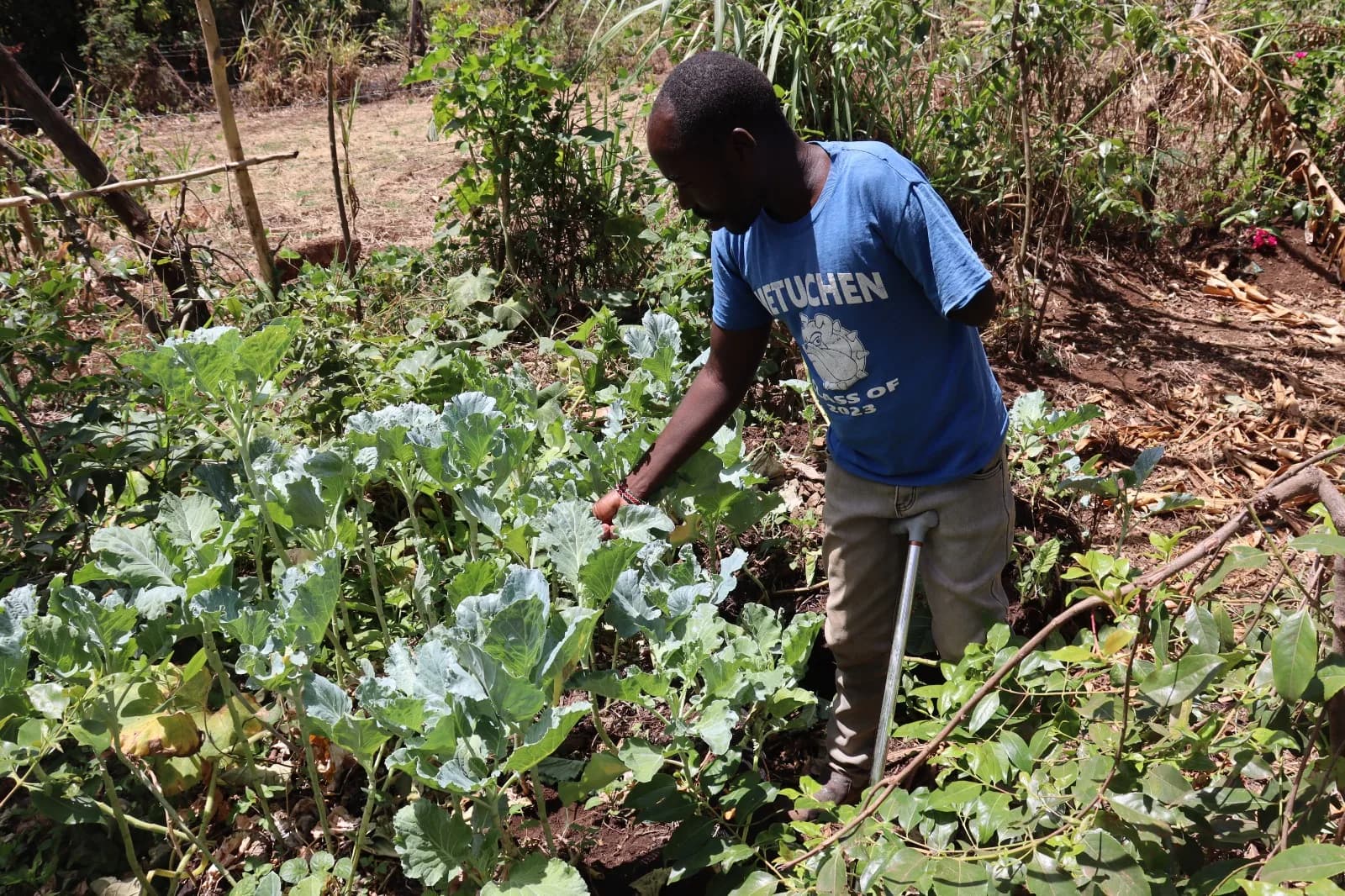
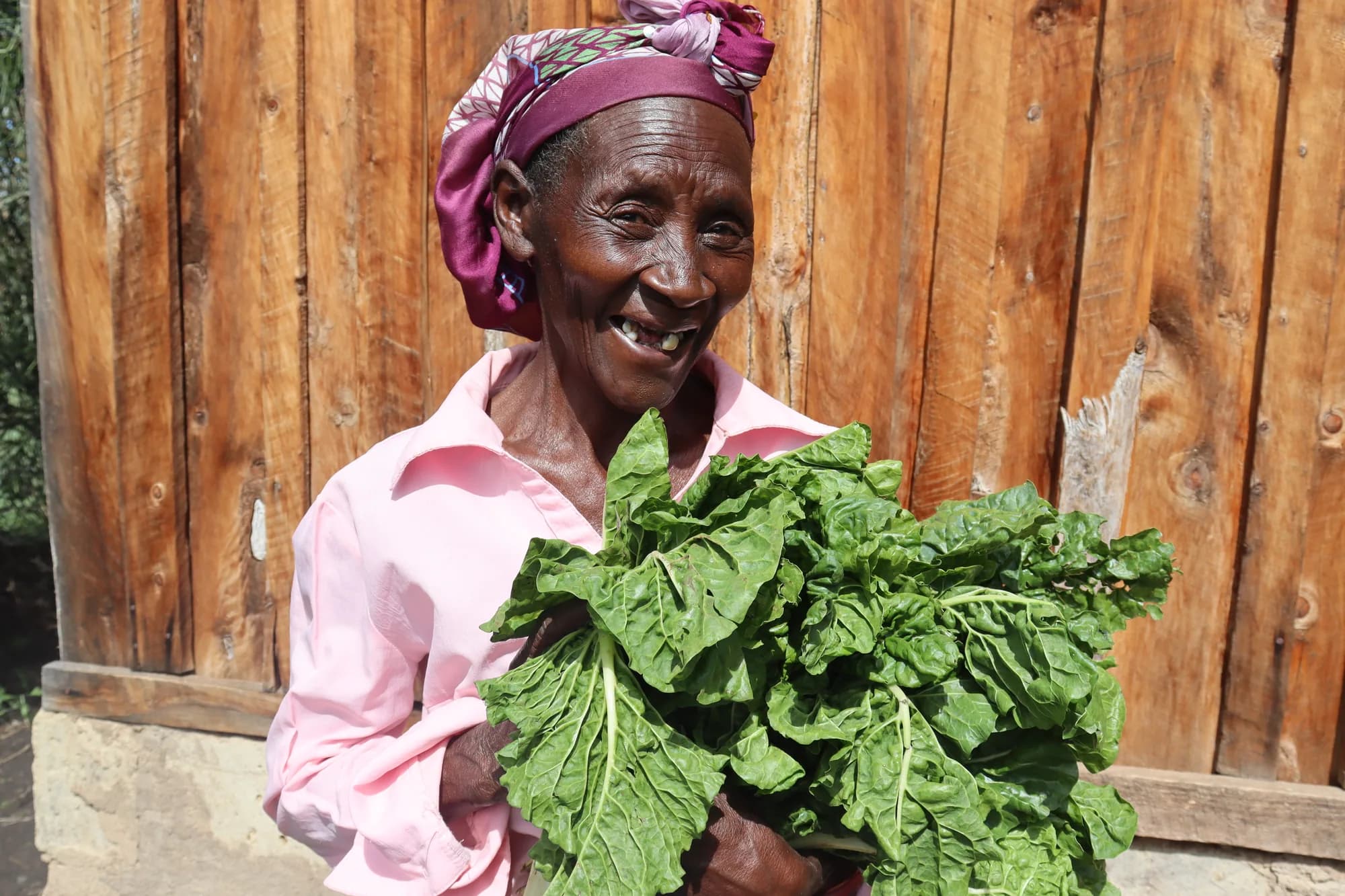
The project promoted kitchen gardens and drought-tolerant and vegetable seeds to help households increase access to nutritious foods.
Growing vegetables close to home also gave mothers practical ways to connect nutrition knowledge with everyday household food choices.
MOTHERS SUPPORTING MOTHERS
The mother-to-mother support groups created spaces where women could discuss nutrition, share experiences and encourage one another.
These groups also connected nutrition with household livelihoods and savings, helping mothers think about the resources needed to sustain healthier choices.
The groups became part of the community structure through which knowledge and support could continue beyond individual activities.
LIVELIHOODS & RESILIENCE
SILC groups gave mothers a way to save together and access loans for activities that could strengthen household livelihoods.
Loans were used for businesses, food, school fees, medical needs, seeds, livestock and other household priorities.
By connecting economic empowerment with nutrition, the project recognised that families need both knowledge and resources to sustain positive changes.
DISABILITY INCLUSION
The project deliberately connected nutrition with disability inclusion so that children with disabilities and their families were not left outside community health and support systems.
Children with disabilities were identified through community and nutrition activities.
Children with nutrition needs were included in assessment and supplementation activities.
Children with disabilities were supported with appropriate assistive devices where these were identified as necessary.
Families and community structures were engaged around the importance of inclusion and support for children with disabilities.
WHAT WE LEARNED
The project demonstrated the value of combining nutrition support with household food production, livelihoods, savings and community health structures.
It also highlighted the importance of continuing to follow up children with disabilities and ensuring that nutrition and health interventions remain accessible to them.
The experience showed that mothers, community health actors, government services and local groups can play complementary roles in creating stronger conditions for children's wellbeing.
EXPLORE OUR OTHER PROJECTS
Five projects. Years of learning, partnership and action.View all projects →DOMSPARK PROJECTS