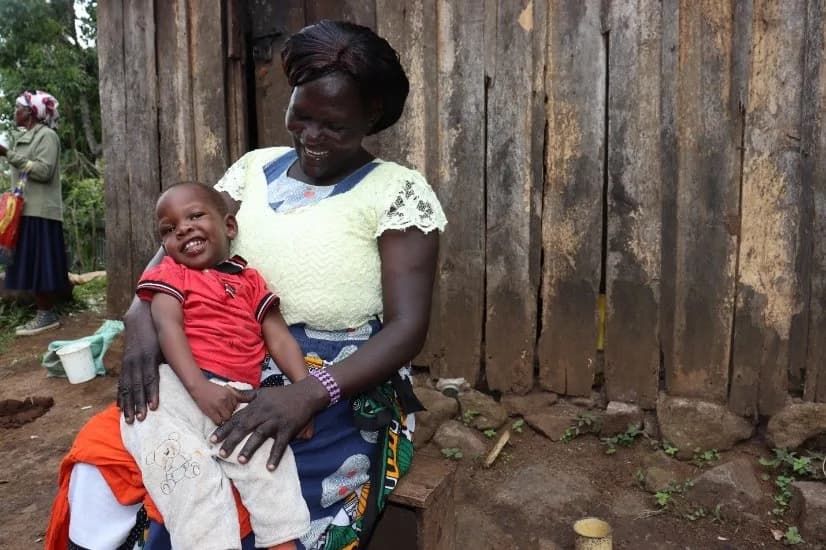
Muriithi was born with cerebral palsy after his mother experienced complications during delivery.
His mother later left Muriithi in the care of his grandmother, Jeniffer, after getting married far away. Jeniffer found herself raising her grandson and carrying the responsibility of caring for a child who needed additional support.
Muriithi's cerebral palsy meant that he faced difficulties with movement and communicating with other children in the village. For Jeniffer, there was a deep concern about what the future would hold for her grandson.
A grandmother steps forward
Rather than giving in to fear, Jeniffer sought out community support. She joined an organisation for people with disabilities and became involved in its Savings and Internal Lending Communities group.
The SILC model brought members together to contribute small amounts regularly. Their collective savings were pooled and loaned among members, with a share-out taking place at the end of each cycle.
Despite her age, Jeniffer became an active member of the group. Her participation gave her an opportunity to contribute to the collective while also building resources for her own household.
Investing in a better future
When Jeniffer received her share-out, she decided to invest the money in something that could benefit both herself and her beloved grandson.
She purchased several chickens, rabbits and a young calf, creating the beginnings of a small household enterprise.
The chickens provided eggs, while the calf represented a longer-term source of milk and income. Surplus eggs could be sold to neighbours, creating an additional source of household income while strengthening relationships within the community.
FAMILY & LIVELIHOODS
For Jeniffer, the investment was about more than livestock. It was about creating security for herself and her grandson.
The income-generating activities gave her a practical way to build resources while continuing her role as Muriithi's caregiver.
Strength through community
Jeniffer's experience also shows the importance of community organisations in supporting older caregivers and families of people with disabilities.
Through the savings group, she was not facing her responsibilities entirely alone. She became part of a network where members could save, borrow, exchange ideas and encourage one another.
The wider work supported through CBM-funded activities implemented by DOMSPARK included training groups of people with disabilities in savings and loans and agriculture, as well as support around drought-tolerant seeds.
These opportunities can be especially important in communities where families caring for people with disabilities face economic and social pressures alongside their caregiving responsibilities.
A story that inspires others
Jeniffer's story became an inspiration to others in the community. Her decision to turn her savings into livestock demonstrated how collective financial support could become a practical investment at household level.
Her experience also challenged assumptions about what older people and caregivers can contribute. Jeniffer was not simply receiving support. She was an active participant in her group, making decisions and investing in her family's future.
A DIFFERENT KIND OF STRENGTH
Caring for a child with a disability can be demanding, but caregivers also have ideas, skills and ambitions of their own.
Jeniffer's journey shows the value of creating opportunities that recognise caregivers as participants in their own right.
The story of Jeniffer and Muriithi is ultimately a story about the strength found between generations.
A grandmother stepped forward when her grandson needed her. Through community, savings and a willingness to invest in the future, she found ways to create opportunities in difficult circumstances.
Jeniffer's journey reminds us that inclusion is not only about the person with a disability. It is also about recognising and strengthening the families and caregivers who stand beside them.