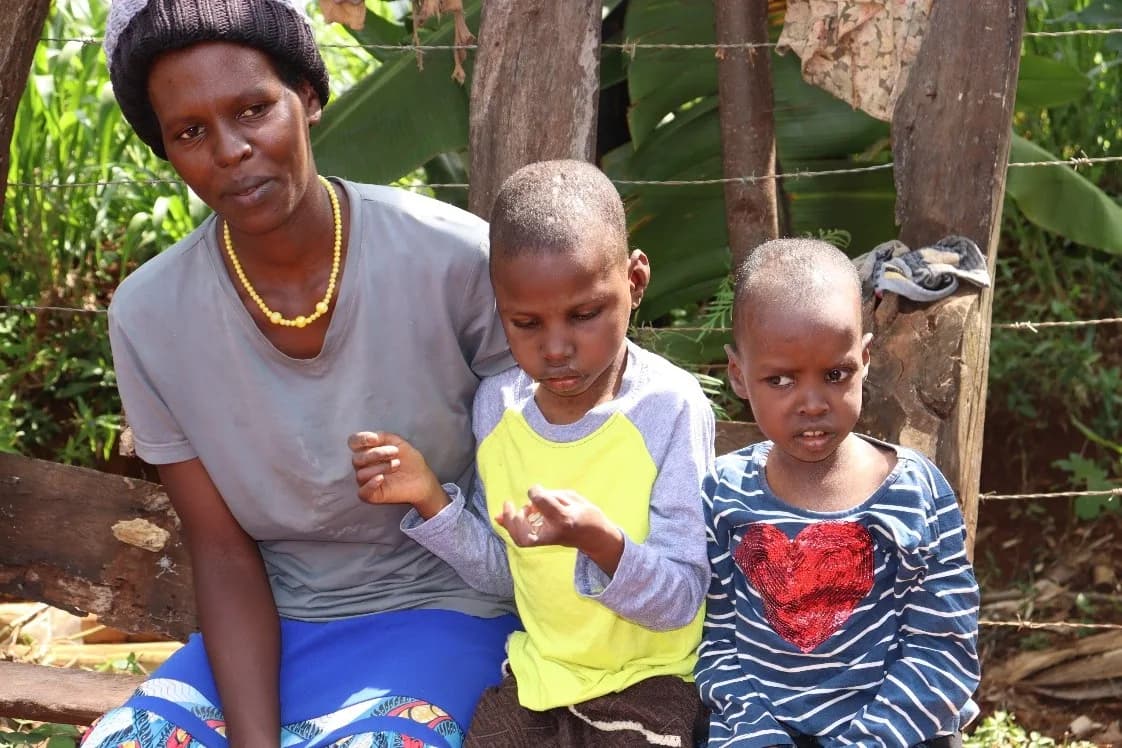
Pamela Kagendo, a single mother of five, lives in the small rural village of Chooro in Meru County.
Two of her children, Angel Mwenda and Bessy Kawira, have disabilities acquired during birth. Their conditions include cerebral palsy and mental health-related challenges and require frequent hospital visits, medication and therapy.
For Pamela, meeting those needs is a constant struggle. The costs of healthcare and transport are difficult to manage, while the demands of caregiving make it hard for her to find regular work.
A morning shaped by worry
Pamela's mornings can be chaotic, filled with tears, difficult moods and the constant worry about how she will provide meals for her children.
Because she cannot leave her children alone, opportunities for casual work are limited. At times she has had to resort to begging on the streets and depending on support from well-wishers.
Some nights, her children go to bed hungry.
These are the realities behind the statistics of disability and poverty: a parent trying to care for children who need additional support while struggling to meet the most basic household needs.
Pamela's story is not simply about hardship. It is about a mother continuing to care for her children despite the weight of circumstances around her.
Finding support through the community
Seeking support, Pamela joined the K.K. Irumbi Organization of Persons with Disabilities, a beneficiary of D.O.M. SPARK.
Through the organisation, she became part of a Savings and Internal Lending Communities group.
Members contribute regularly, pool their savings and make loans to one another. At the end of the savings cycle, members receive their share-outs, providing additional funds for household needs and personal projects.
For Pamela, the share-out money has helped her provide food and other basic necessities for her children.
COMMUNITY SUPPORT
For a family living under pressure, even a small financial cushion can make a meaningful difference.
SILC gave Pamela a way to participate in a collective financial system and access resources through her community.
Growing food close to home
Pamela also received training to establish a small kitchen garden.
She and her family began using vertical gardening techniques with grow bags, creating an opportunity to produce food close to home.
But even this promising solution has proved difficult to maintain.
The poor condition of the grow bags has affected the garden's yield and sustainability. Pamela's overwhelming workload and lack of time also make it difficult for her to give the garden the attention it requires.
Her experience shows that providing a livelihood tool is only one part of the solution. Families facing intense caregiving responsibilities may also need time, practical support and resources to make such opportunities sustainable.
The weight of caregiving
Pamela's challenges are not only financial.
She experiences chronic fatigue and anxiety and often lies awake at night worrying about the future of her children.
The demands of caregiving leave little time for socialising or taking care of herself. The isolation adds another layer to the difficulties she faces.
For parents and caregivers of children with disabilities, support is often needed far beyond medical treatment alone. Food security, income, respite, emotional support and access to community networks can all influence a family's ability to cope.
WHAT PAMELA'S STORY SHOWS
Families caring for children with disabilities need systems of support that recognise the whole family's needs.
Livelihood opportunities and community savings can help, but they need to be accompanied by practical support that makes it possible for caregivers to participate.
Still moving forward
Pamela's journey remains troubled with challenges. There is no simple ending to her story and no single intervention that can remove the pressures she faces.
Yet she continues to care for her children and seek ways to improve their circumstances.
Her determination reflects the strength of many caregivers whose work happens largely unseen — preparing meals, attending therapy sessions, seeking treatment, finding ways to earn income and caring for children who depend on them.
Pamela's story is a reminder that inclusion must also include the people who provide daily care. Supporting children with disabilities means supporting their families and caregivers too.