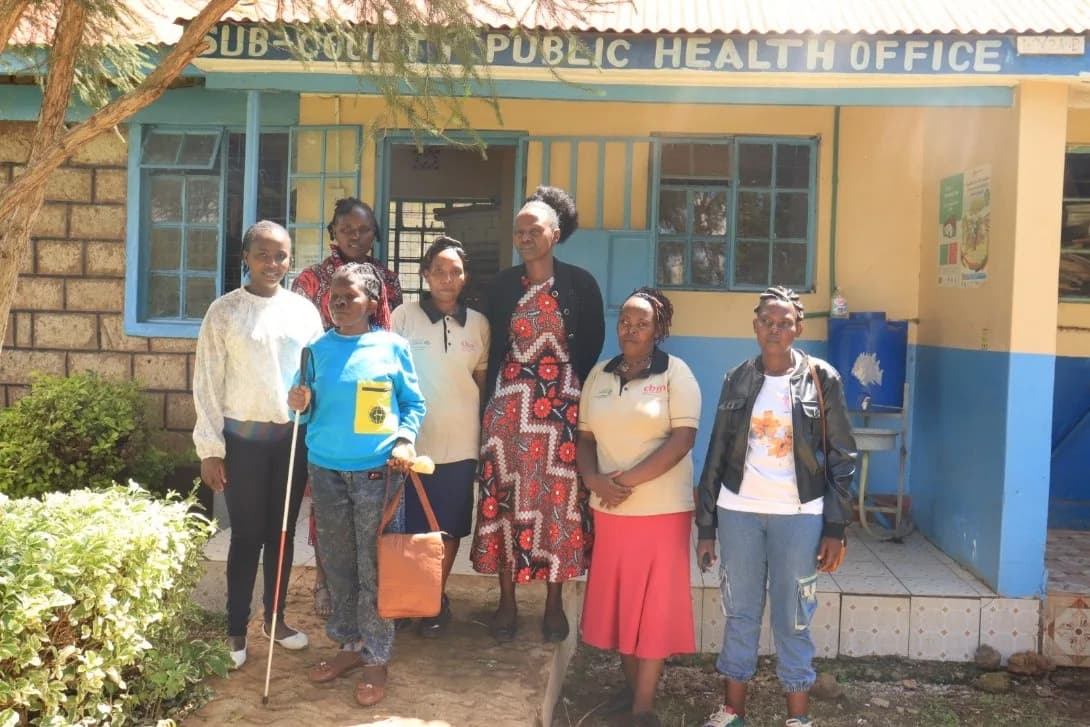
Lucy Kanuu is a young mother with a hearing impairment from Igembe Central who used to fear falling sick.
This was because her nearest hospital did not have a sign language interpreter. Every time she went there, communication barriers made it difficult for her to explain what she was experiencing, and she was wrongly diagnosed.
The consequences lasted for years. Lucy experienced repeated illness, pain and frustration. She often left the hospital without the help she needed.
Her experience was shared by many other deaf people who avoided seeking medical care because they could not communicate easily with health workers.
“For the first time, I was able to explain my illness directly to a medical professional.”
— Lucy Kanuu
A barrier became a call for change
Things began to change when Lucy became one of the trained Community Action Plan developers and activators through the COMFI — Cultivating Foundations for Inclusion in Meru County — project.
The project empowers communities, including persons with disabilities, to speak up and advocate for inclusive health services.
Together with others, Lucy helped present community needs to the hospital. They clearly identified the communication barrier created by the absence of a sign language interpreter and how this was excluding deaf people from accessing healthcare.
The hospital in-charge acknowledged the gap and immediately worked with the Community Health Strategy focal person to provide interim support while a health worker was trained.
A hospital begins to listen
A few months later, the change Lucy and the deaf community had hoped for became a reality. The hospital had a nurse who was fully trained in sign language.
Lucy describes the day she returned to the hospital as the best day of her life.
For the first time, she could communicate directly with a medical professional. She was correctly diagnosed after years of wrong treatment and received the care she needed.
Within weeks, she was free from pain.
WHAT CHANGED
A communication barrier was identified, raised through community advocacy and followed by practical action.
Kangeta Sub-County Hospital now has trained medical personnel able to communicate using sign language, improving access for people who are deaf or hard of hearing.
One change can open a door for many
Lucy's experience shows why inclusive services matter. A service may technically be available, but if a person cannot communicate with the people providing it, that service remains difficult to access.
Through COMFI, communities are being supported to identify and address barriers — whether they are communication, physical or attitudinal — so that persons with disabilities are not left out.
For Lucy, the change was deeply personal. But it also created an opening for other deaf people in the community to seek care with greater confidence.
Her story is a reminder that sometimes inclusion begins with something as fundamental as being able to tell someone what is wrong — and knowing that they will listen.